
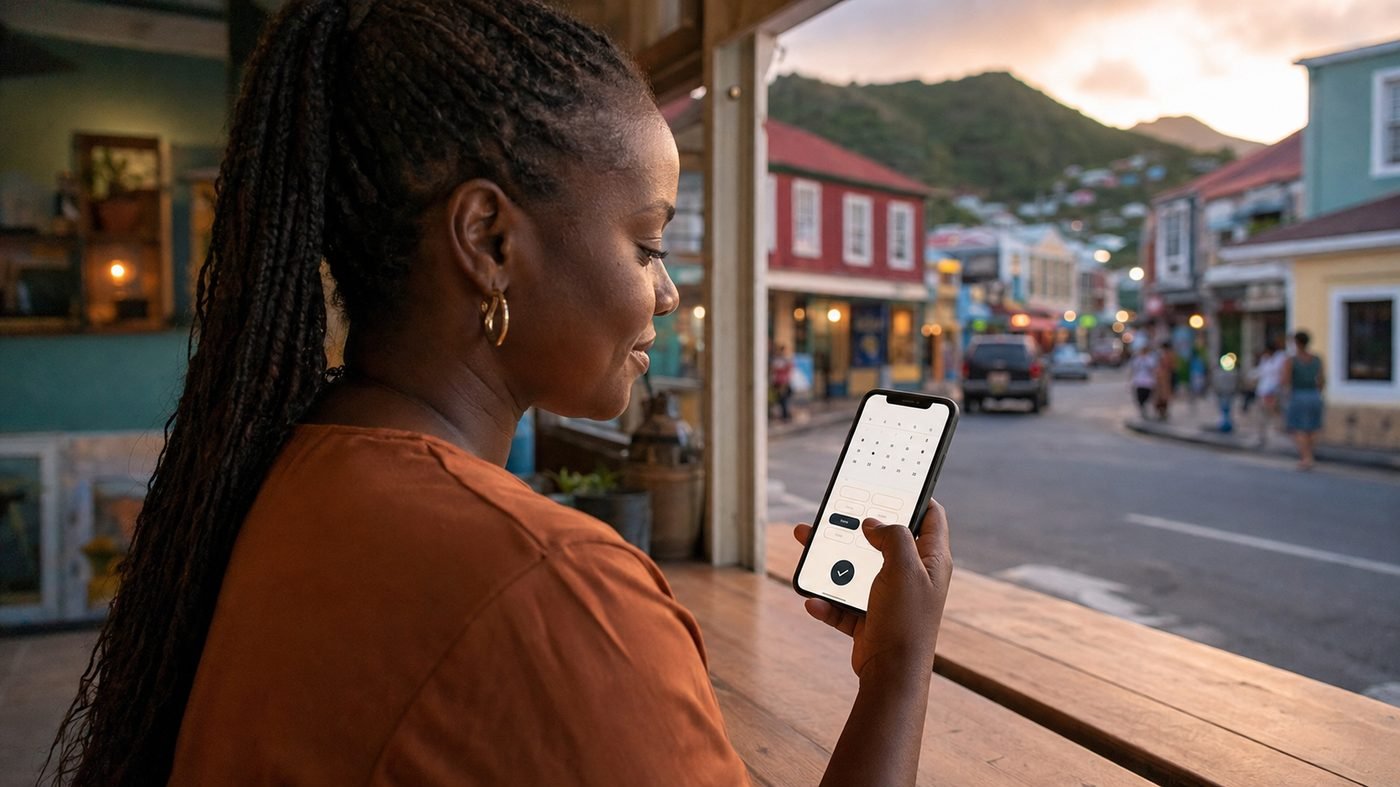
If your business runs on appointments, tours, tables, or rentals, the booking system is not a nice-to-have feature bolted onto your website. It is the website, as far as your customer is concerned. Everything else is decoration.
Here is what actually matters when choosing one, based on what tends to break in practice.
It has to work on a phone, first
Most bookings happen on a phone, often at night, often one-handed. If your booking flow needs pinching and zooming, or the date picker is fiddly, people give up. We have watched businesses lose more bookings to an awkward calendar widget than to their prices.
Before committing to any tool, book a test appointment on your own phone. If it annoys you, it will annoy your customers.
Fewer steps beats more features
Every extra field costs you bookings. Ask yourself honestly what you need before someone books versus what you can collect afterwards. Name, contact, service, and time are usually enough. Everything else can wait.
The most common mistake is building a booking form that is really an intake questionnaire. Take the booking, then ask the rest.
Deposits change everything
If no-shows cost you money, taking a deposit at the point of booking is the single highest-impact change you can make. It filters out casual enquiries and commits the customer.
This is also where many off-the-shelf tools get expensive or awkward, particularly with regional payment processing. It is worth checking early rather than discovering it after you have built everything around a tool.
Confirmations and reminders are not optional
An automatic confirmation email reassures the customer they actually booked. A reminder before the appointment reduces no-shows more than almost anything else you can do. If a system cannot send both, it is not finished.
Off-the-shelf tools vs. a custom setup
Tools like Calendly, Square Appointments, or Fresha are genuinely good, and if one fits your business, use it. They are cheaper and faster than building something bespoke.
Where they struggle is when your booking has rules that do not fit a template: multi-day rentals, tours with seat limits, deposits split across services, or availability that depends on staff and equipment at the same time. Forcing an unusual business into a standard tool usually means you end up doing manual work every day to patch the gaps.
A reasonable rule: if you are spending more than a few hours a week working around your booking tool, the tool is costing more than a custom one would.
It has to connect to everything else
A booking system that does not talk to your calendar, your email list, and your payment processor just moves your admin from one place to another. The point of automating bookings is fewer things to check, not more.
We build booking flows as part of the website rather than as an add-on, which is usually why they convert better. If you want to talk through what would fit your business, tell us about your project.